


A mother cradles her young daughter. The infant is heavily bandaged around her head, arm and index finger. Caressing her face, she looks down at her mother with a mixture of adoration and wonder: a pose so candid and pure it rarely lasts beyond childhood. It is rarer still for it to last after such a close call with death – an IDF-guided missile which claimed the life of her sister.
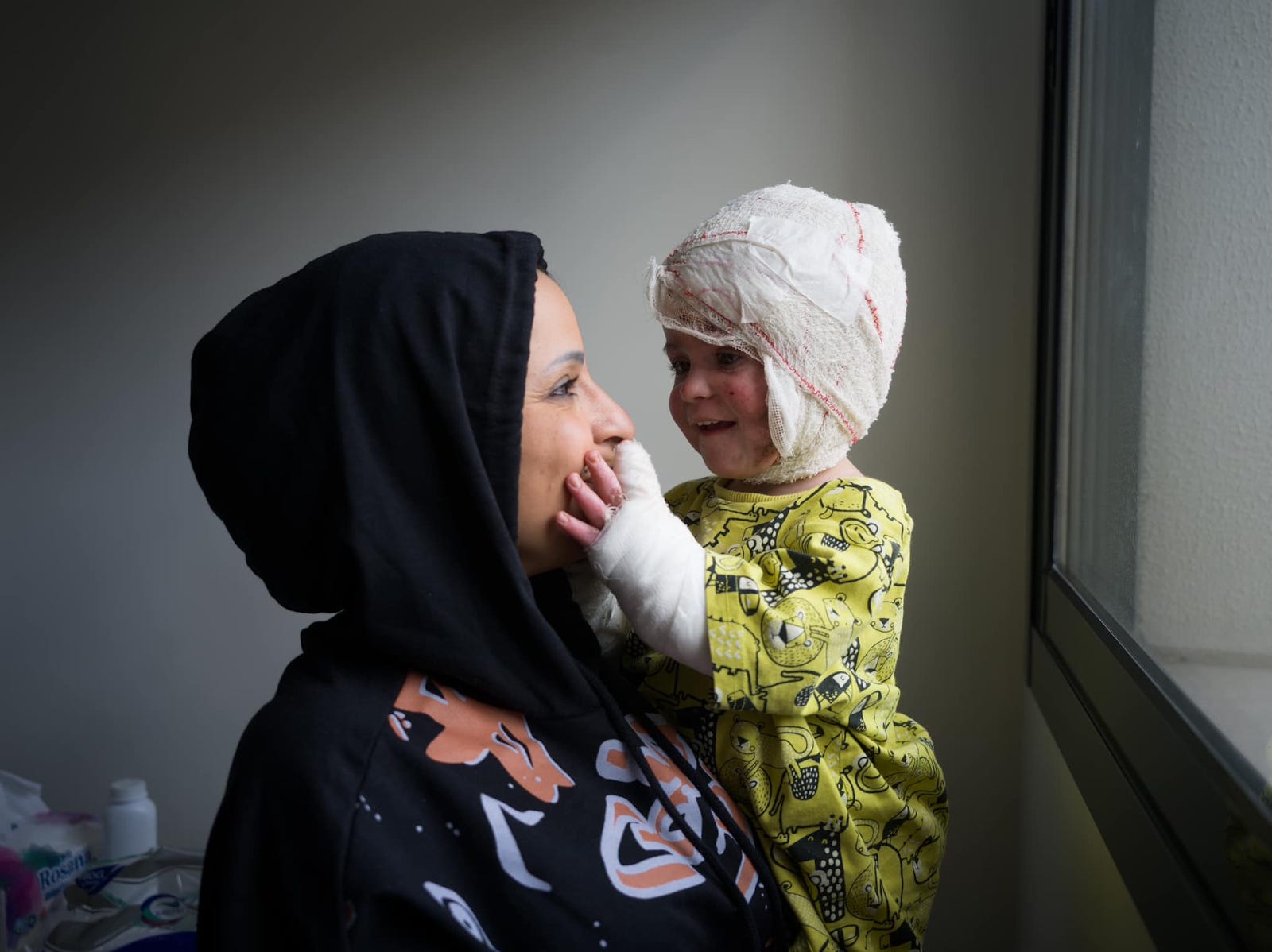
Ivanna and Fatima, 2024, by Giles Duley captures a moment of reprieve for Fatima and her daughter Ivanna, who were displaced in mid-September 2024 after an IDF-guided missile hit their home in Lebanon. Embroiled with death as much as the past, the photograph captures a fleeting, irretrievable moment, embalming it in time. With such fierce tensions in the region, the question, more pre-eminent than with other portraits, even, is, where are they now?
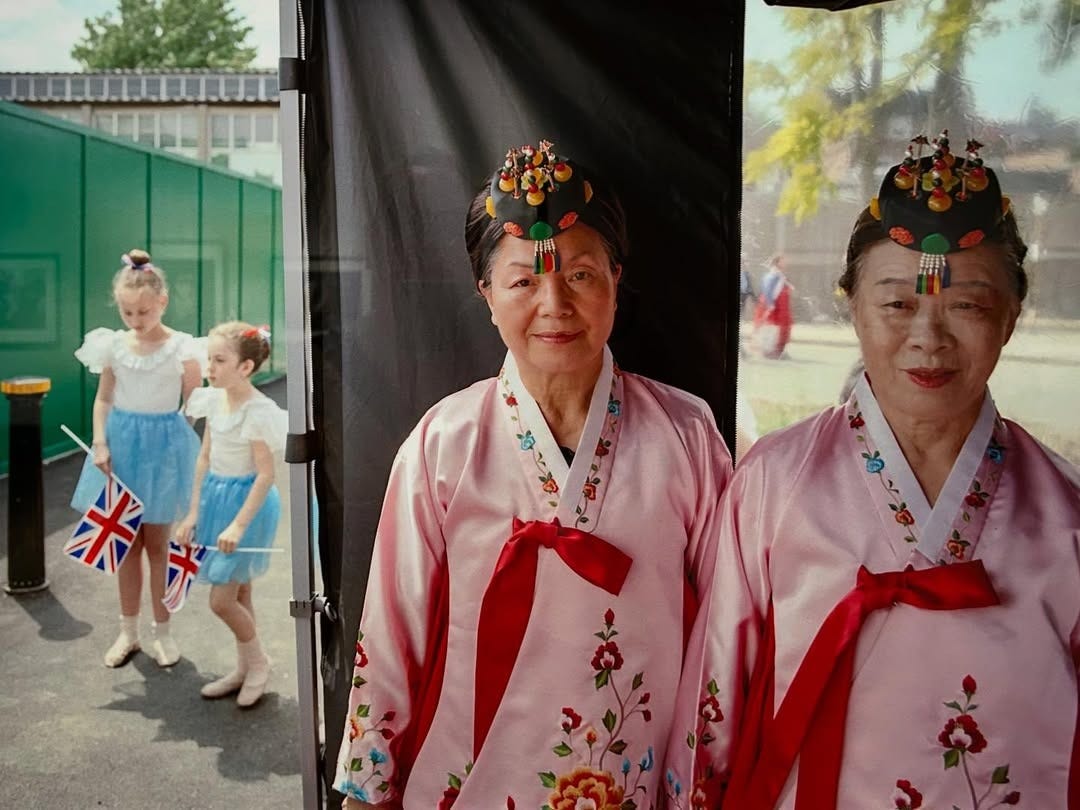
Two women pose for a portrait in traditional Korean hanbok. In the background behind them, two girls are caught idling, Union Jacks loose at their wrists. The foregrounded women of Chan-yang Kim’s Backstage, 2024, represent a nod to traditional portraiture: an older generation, a display intended to consolidate status, a curated cultural identity. The girls in the background, however, separated by focus and a vertical dividing pole, represent the candidness of a youth which has known nothing other than the camera’s omnipresence. Both young and old are conscripted into portraiture’s rhetoric, both become synonymous with their cultural ‘identity’; neither can escape the medium’s implicit message: ‘this is how you look’, ‘this is what you signify.’
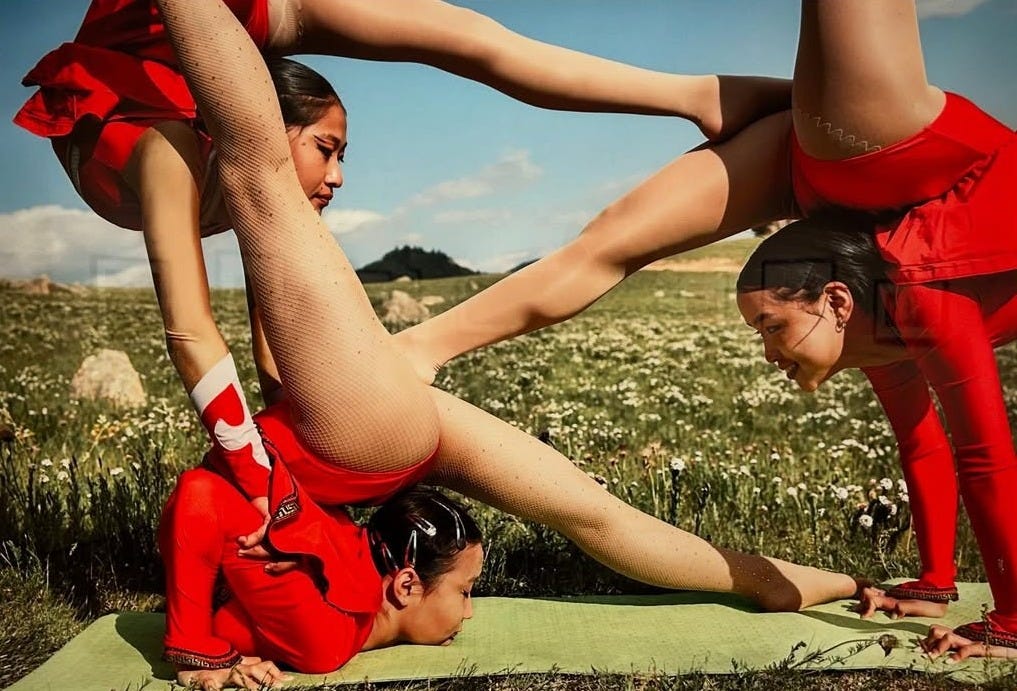
Limbs zigzag across the frame, sequined tights and fingers claw at their neighbours. The limbs in Tom Parker’s Contortionism Ulaanbaatar, 2024, are people. A grassland backdrop and a differential focus draws out the red of the contortionists. But the background is not the only thing relegated in importance: the faces are profile, the body, in celebrating the Mongolian contortionism art form takes centre stage.
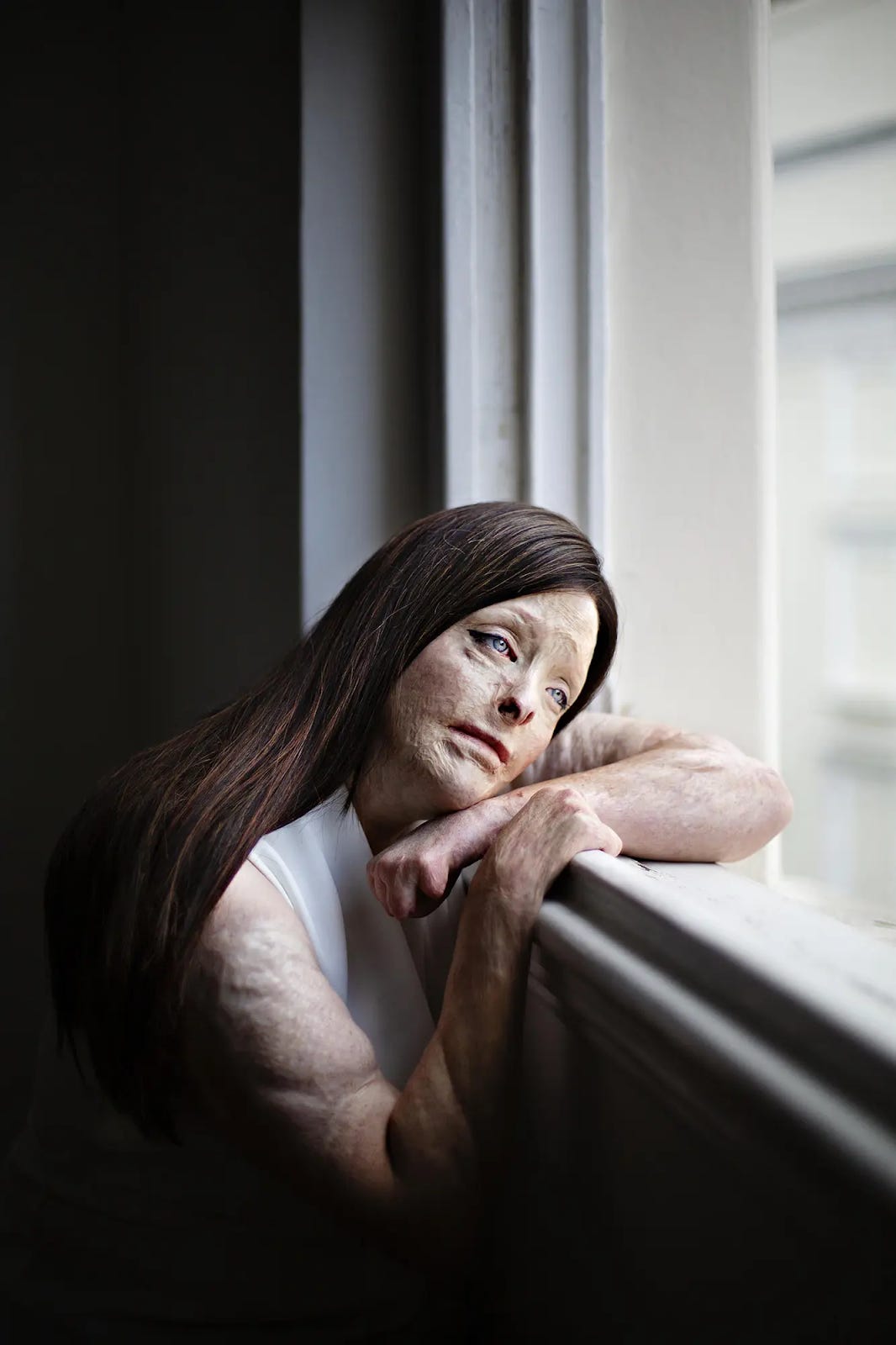
The winners appear almost to have been chosen at random. First prize was won by Swedish photographer Martina Holmberg for her portrait Mel, 2024, from the series The Outside of the Inside, which ‘is a beautiful tribute to human resilience and the rich diversity of appearances found around the world.’ While this may be true, the emotional or sympathetic burden of the portrait, which captures a burns victim looking out of a window, seems over-stated. The subject is saved from sentimentality, however, by the cool greys and the rectilinear framing. Old-fashioned technical know-how, in other words.
The National Portrait Gallery’s 2025 Taylor Wessing Photo Portrait Prize isn’t exactly going to redefine the portrait photography canon. Its hang appears random, with no clear organising principle (nationality, country, experience, group/ self portraiture would have all been good places to start); there is no sense that the pictures are talking to one another. Regardless, the works on show demonstrate the possibilities of the genre: to capture people, and to turn the focus back on the viewer, with the realisation that their own identity is inextricably linked to culture more widely.