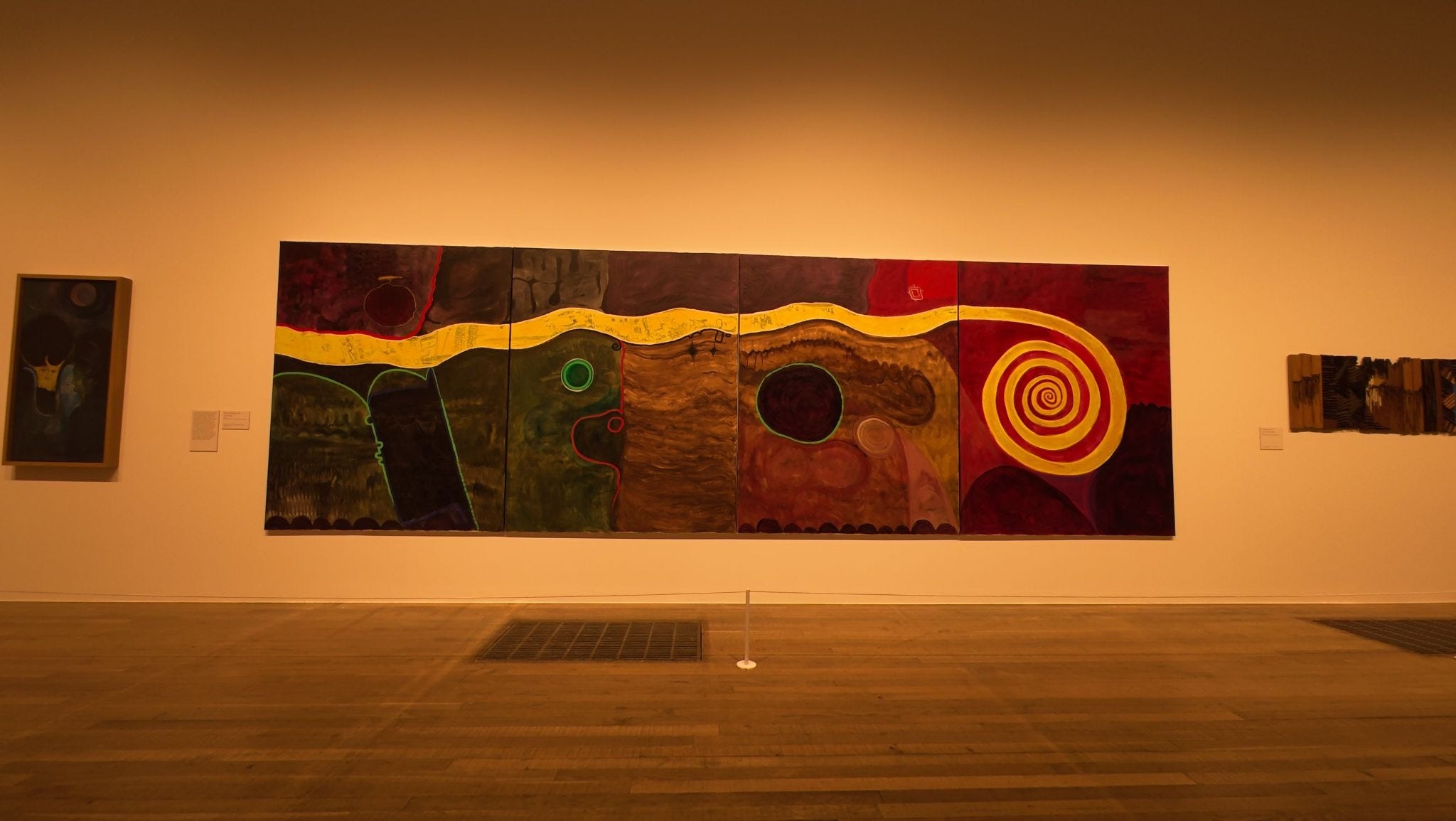
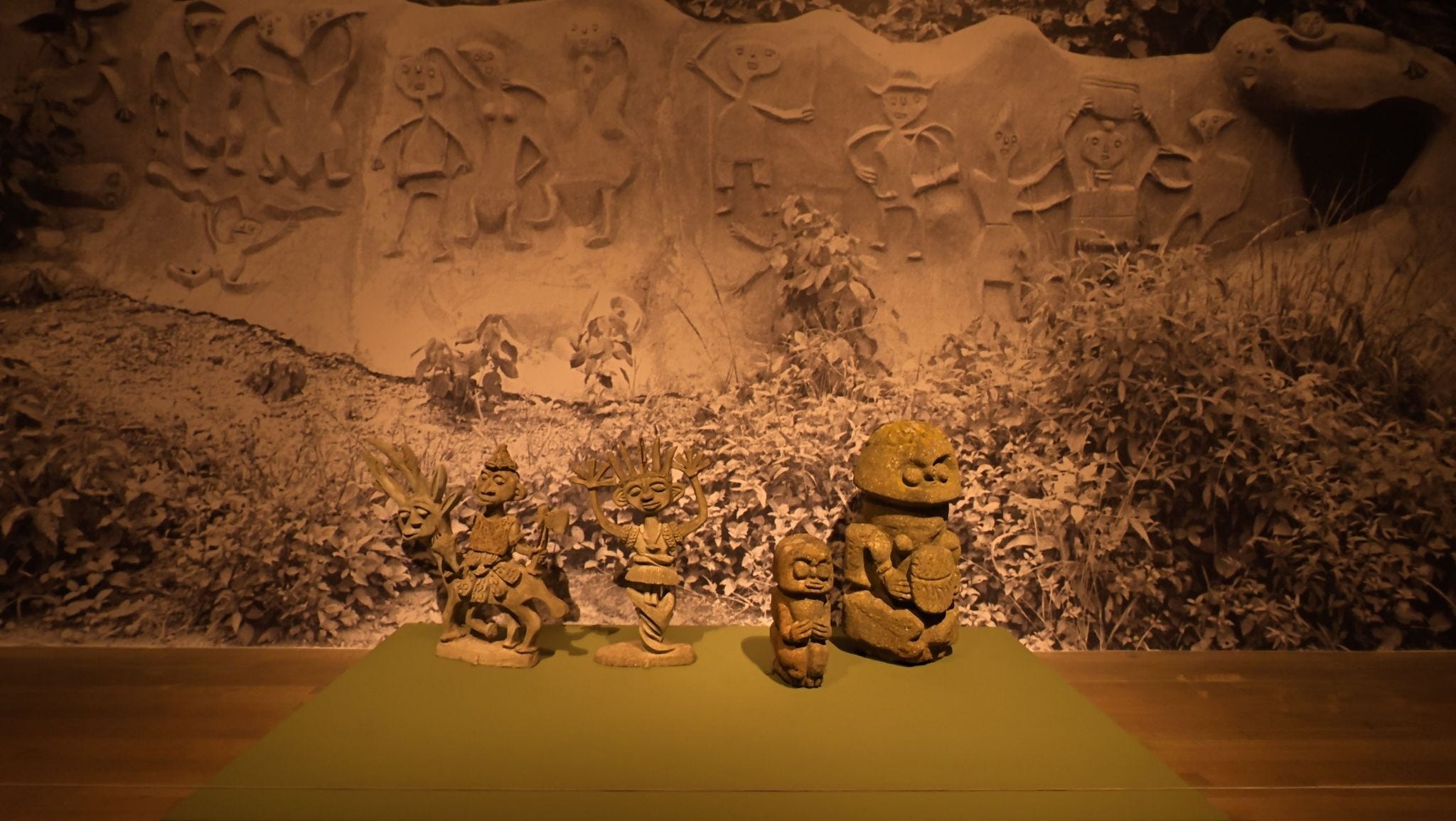
Last month, Tate’s main competitor in London, the National Gallery, announced its intention to lift its ban on post-1900 art, as well as its plans for a £375m new wing. To compete, Tate needs to show that it is still the capital’s top destination for contemporary art, address its identity crisis and problems with footfall, all at once. This is no time for mediocrity.
Nigerian Modernism is sold to viewers as an exploration. The show sets out to inform its Western viewers on the little-known artistic milieu in Nigerian culture, at a time of immense optimism following Nigeria’s independence from the manacles of British colonialism in 1960. However, where I expected artistic freedom, I got didacticism, where I expected innovation, I was met with derivative, where I hoped for optimism, I was met with stagnation.
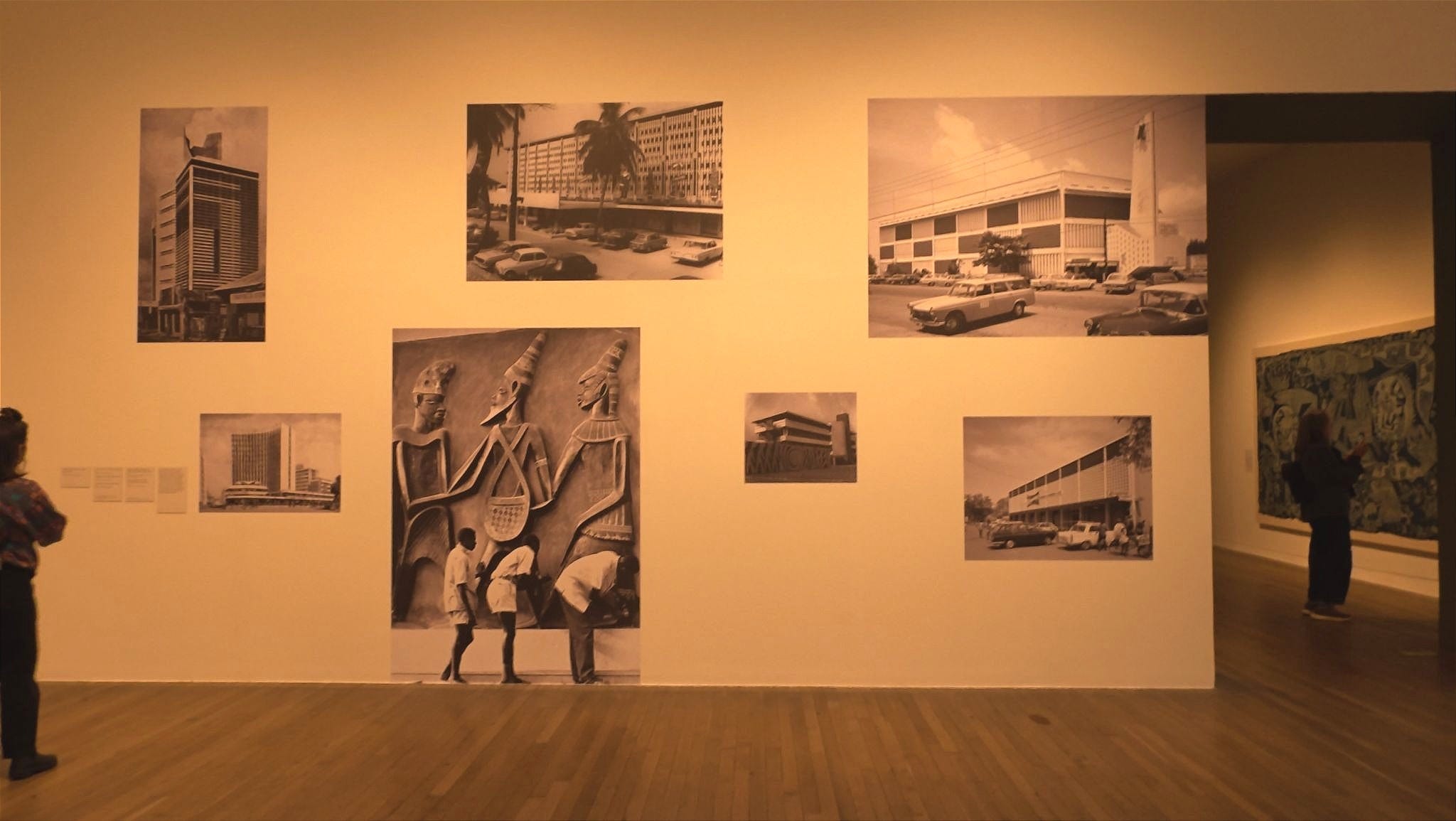
Much of Nigerian Modernism is reminiscent of Leigh Bowery!, Tate’s recent retrospective of the late performance artist. Bowery seemed to anticipate the trend of identity politics which is currently looming over cultural institutions in the UK; ironically, his exhibition ensnared him in these same prescriptive paradigms.
How does one go about being inclusive, informative and celebratory, without alienating a considerable portion of punters? Nigerian Modernism, too, seems to have fallen victim to the same self-sabotage.
The exhibition lumbers out of the blocks. Room one and two are by far the worst of the bunch. Run of the mill expressionist and figurative art lines the walls, celebrating masquerade and carnival; the space is crammed, with little space for works to breathe and the juxtapositions are simplistic. (Let’s not bring back the Salon.) The curators’ attention here appears to have been to prioritise bulk, linearity and education in what can only be described as a history lesson.
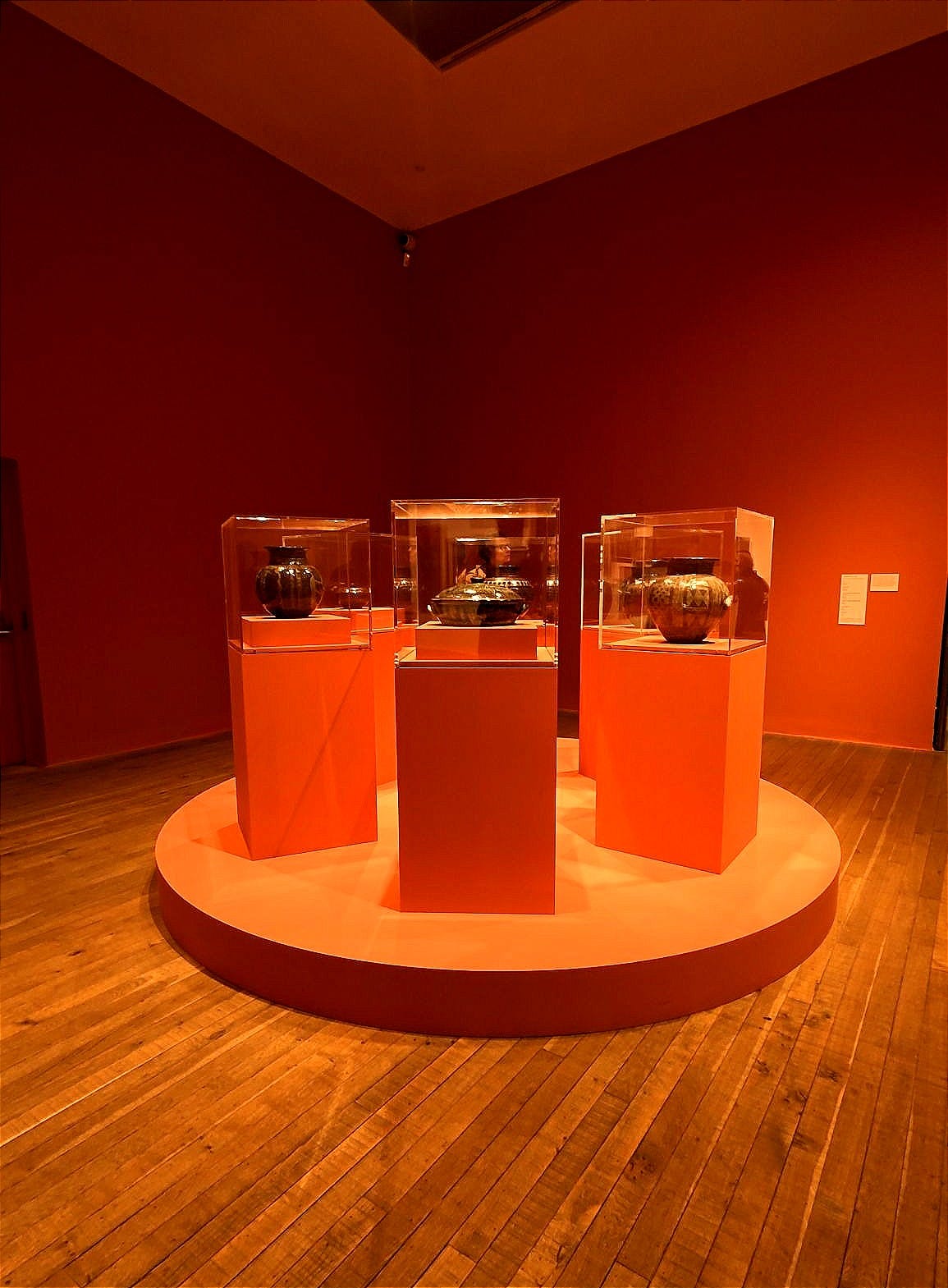
Room three is rather better. Its focus, Lady Kwali, reached celebrity status in Nigeria for her adaptations of traditional pottery methods. A caption explains: ‘She looped ropes of clay in concentric circles to build up the walls of the pot, before beating them into a flat, even surface’, she would then carve geometric animals into them with sharpened palm and bamboo.
Room four is, again, disappointing. Much of the work here is cubist, but anyone would take a Picasso in preference. Indeed, there is nothing which outwardly distinguishes these artists’ works from those of the Spaniard. This is, of course, an unforgiving reading, seeing as Picasso drew much inspiration (read theft) from West African ‘Primitive’ (indigenous) art. This sets viewers up for an interesting problematic. For most gallery goers, Picasso likely ‘got there first’, meaning that their first experience of Cubism and its borrowings from indigenous art were through his work. So who stole from whom? And can we really praise a foreigner’s interpretation of art over that of its native practitioners’?
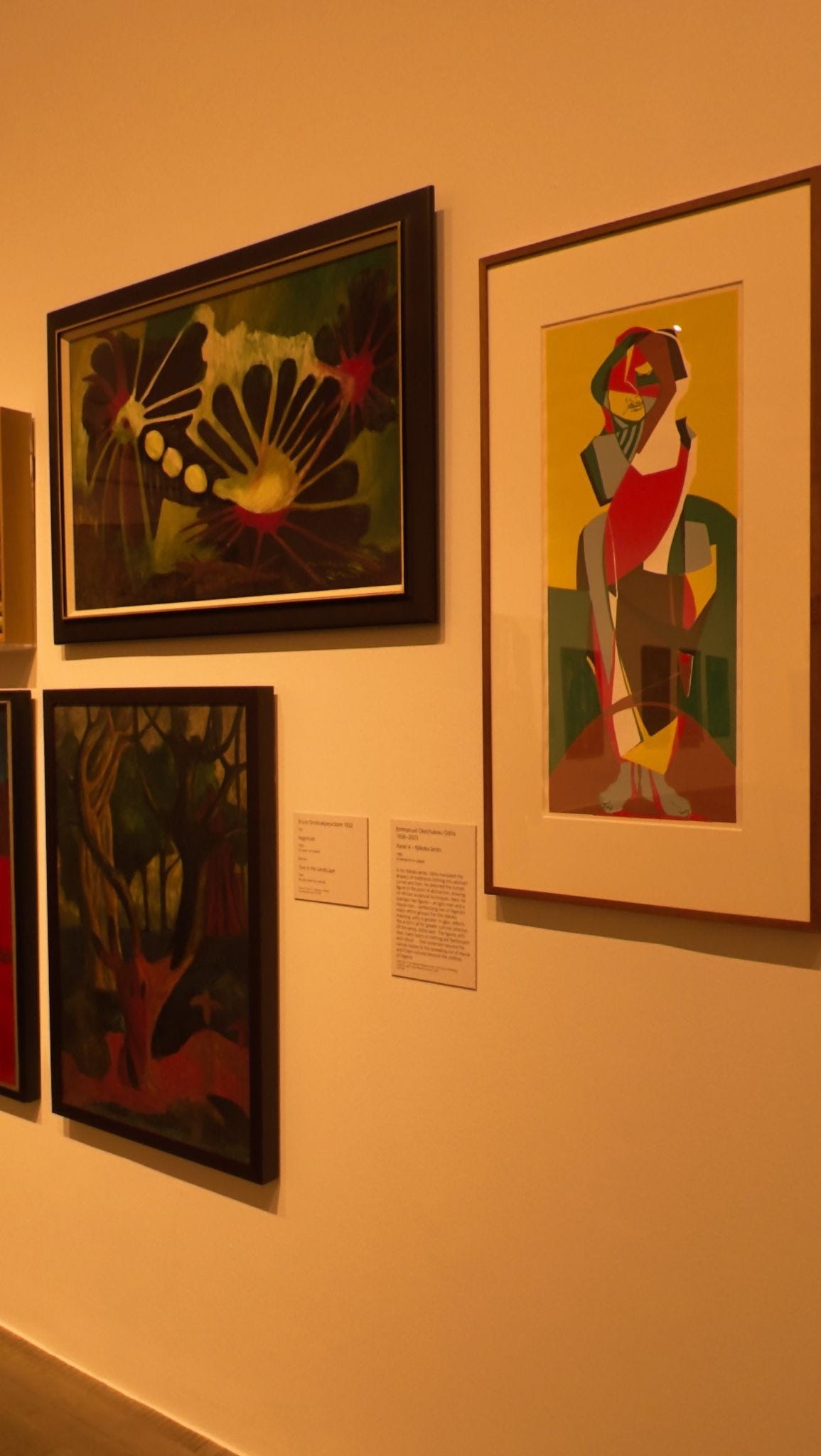
Though it certainly gains momentum as it continues, this is the lasting impression of Nigerian Modernism. Those who are acclimatised to Western art will, in all likelihood, attribute a different value judgement to the works on show – at best, a novel and innocent experience, at worst, a cabinet of curiosities. Nigerian Modernism relegates itself to a history lesson; one which ensconces its viewers in a familiar, safe space and erects a barrier between them and the artwork, one which prevents its contents being celebrated as art in their own right.